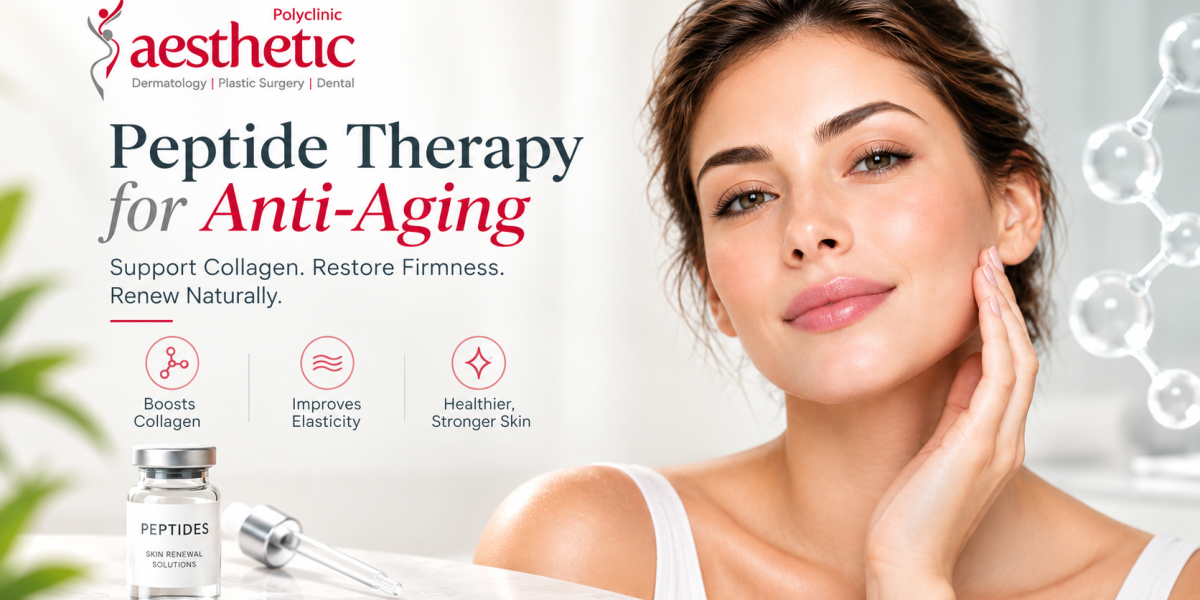
With the passage of time, it is obvious that the skin would lack collagen and elasticity, which prompts people to look for milder ways as opposed to drastic ones. The field of dermatology has provided scientifically backed solutions that support and improve the natural capability of the body to heal and regenerate itself, rather than suppressing the natural healing process of the body. One such solution that has garnered lots of hype is peptide therapy for anti-aging.
Aesthetic Polyclinic provides individuals with an opportunity to discover more about this method through specialized consultations based on their own skincare needs.
Key Takeaways
- Peptides are defined as short chains of amino acids that trigger the skin to produce collagen and elastin.
- The anti-aging peptides operate gradually, as they help the body repair itself naturally without suddenly changing its composition.
- Such a procedure is ideal for people who prefer non-surgical methods.
- The efficiency of such an approach depends on different factors like the condition of the skin, individual habits, and frequency of procedures.
- A consultation will help choose an appropriate treatment plan for each specific case.
What Is Peptide Therapy and How Does It Work?
Peptides are natural proteins found in the skin that serve as messengers to the skin cells. As such, they send signals to the skin cells, allowing them to function just as they did when they were younger by producing collagen, repairing themselves, and maintaining the skin’s protective layer.
This is what peptide skin therapy entails. Instead of merely hiding the symptoms of aging temporarily, it seeks to promote rejuvenation from within, thus making it a more viable means of achieving permanent results.
Reasons Behind the Popularity of Rejuvenating Peptides
As the search for ways that seem less like a procedure and more natural continues, there is a rising interest in anti-aging peptides. There are several reasons why:
- They are tolerated very well, even by sensitive skin.
- They can be used together with other treatments for better effects.
- They don’t require any downtime at all.
- They help achieve gradual and natural effects rather than immediate results.
- Research is ongoing to come up with different peptide formulas for specific problems.
How Does Peptide Skin Therapy Help in Skin Regeneration?
This therapy relies on regenerative processes. The activation of fibroblasts leads to the production of collagen and elastin fibers, which makes skin tight and firm.
As a result, skin conditions will improve, and skin will become stronger, hydrated, and tightened. As the action of peptides is slow, people tend to feel that skin is regenerated, not treated.
Why Is This Skin Regeneration Treatment Reliable?
A good skin regeneration treatment takes into account more than surface effects. The process looks at the skin’s healing journey through weeks and months, rather than its instant effects once the treatment has been applied.
The benefits of peptide treatments are that they complement the natural healing timeline of your skin. This way, the effects appear more genuine and natural as opposed to being artificial. The skin regenerating treatment is often recommended with lifestyle advice to increase the longevity of results.
Who Is Eligible For Peptide Therapy For Skin?
This therapy can serve people of any age group or any particular issue. It can be beneficial for:
- People who are experiencing very fine lines and lack of firmness.
- For those who want to retain the effects gained from other cosmetic treatment procedures.
- For people with sensitive skin who want something gentle to work on their skin issues.
- For people who want to prevent future problems with their skin from occurring now.
What Should You Expect from a Rejuvenating Treatment Session?
An anti-aging treatment regimen is always started by a thorough evaluation of the client’s skin. This way, the most appropriate peptide treatment and application method are chosen.
These treatments are usually short and not painful; on the contrary, most clients find them relaxing. The ability to continue with one’s usual routine right after the treatment is what attracts many clients.
Peptide Therapy and Its Comparison with Other Skin Treatment Methods
Even though there are numerous ways for achieving skin rejuvenation, peptide therapy is especially unique in that it uses a biological mechanism rather than causing any harm to the skin. The mechanism of action here is very gentle, as it does not depend on any serious injury to the skin that would lead to regeneration.
Thus, it becomes a preferred method for people who want to achieve good results without taking risks.
Youthful Skin with the Help of Peptides
While getting older is an unavoidable phenomenon, the reaction of the skin to it is possible to influence in a mild manner by means of proper treatment. The peptide therapy for anti-aging is a scientifically based and patient-friendly method that aims to enhance the natural regenerative properties of the skin, allowing one to feel confident in one’s look without any dramatic steps.
For those who wish to try this approach, there are personalized consultations available at Aesthetic Polyclinic. Visit us and take the next step toward healthier, more resilient skin with guidance from experienced professionals.
Ready to give your skin the care it deserves? Book a consultation with Aesthetic Polyclinic today!
FAQs:
Does peptide therapy hurt?
No, as it is usually described by patients as a comfortable procedure without any pain during its course. Any sensation felt is usually temporary.
When will I see the results?
Results usually come gradually within several weeks due to increased collagen production. They appear slowly but surely and not instantly.
Can anyone have this treatment done?
This is one of those few skin procedures that work well with everyone regardless of the skin type, yet a consultation is always required to make sure about it.
Is any downtime necessary?
Downtime is not necessary at all, as you may return to your usual routine immediately after the session.
What is the frequency of treatments?
It highly depends on individual preferences and must be discussed during the consultation.