Ask five different clinics about a chemical peel and you will likely get five different answers about how deep it should go. That is because a chemical peel treatment is not one fixed procedure, it is a spectrum, ranging from a light surface refresh to a deeper resurfacing session that reaches well into the dermis. Choosing the wrong depth is one of the most common reasons people feel underwhelmed by their results, or worse, end up dealing with irritation they were not prepared for. This blog breaks down how peel depth is actually selected, what each level does to the skin, and why matching depth to your specific concern matters more than the acid used.
Chemical peels have quietly become one of the most requested treatments in aesthetic medicine, and the numbers back that up. Industry data from the American Society of Plastic Surgeons’ 2023 procedural statistics report shows that chemical peels stayed a favoured skin rejuvenation option, with over a million treatments carried out that year, an 8 percent jump from the previous (source: ASPS 2023 Procedural Statistics Report). That kind of sustained demand is part of why clinics across the UAE have started paying closer attention to depth selection rather than offering a single standard peel to every patient who walks in.
Why Depth Decides the Outcome
Skin is layered, and a peel’s acid concentration determines how far down it travels before it is neutralised. A peel that only touches the outermost layer of dead cells will do very little for deep pigmentation, while a peel that goes too deep for someone with sensitive or reactive skin can trigger prolonged redness or uneven healing. This is the main idea covered in our detailed chemical peel treatment guide by epidermal depth, the acid itself is only part of the equation; the depth it reaches is what actually determines whether a concern gets resolved or barely touched.
A proper consultation looks at skin thickness, tone, sensitivity, sun exposure history, and the specific issue being treated before landing on a depth. Guessing this step is the most common reason people try a peel once, see little change, and assume peels “don’t work” for them.
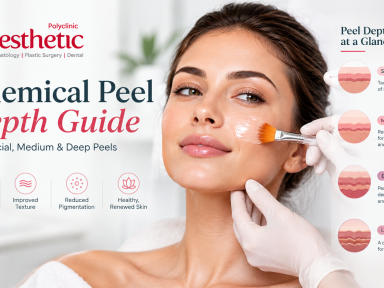
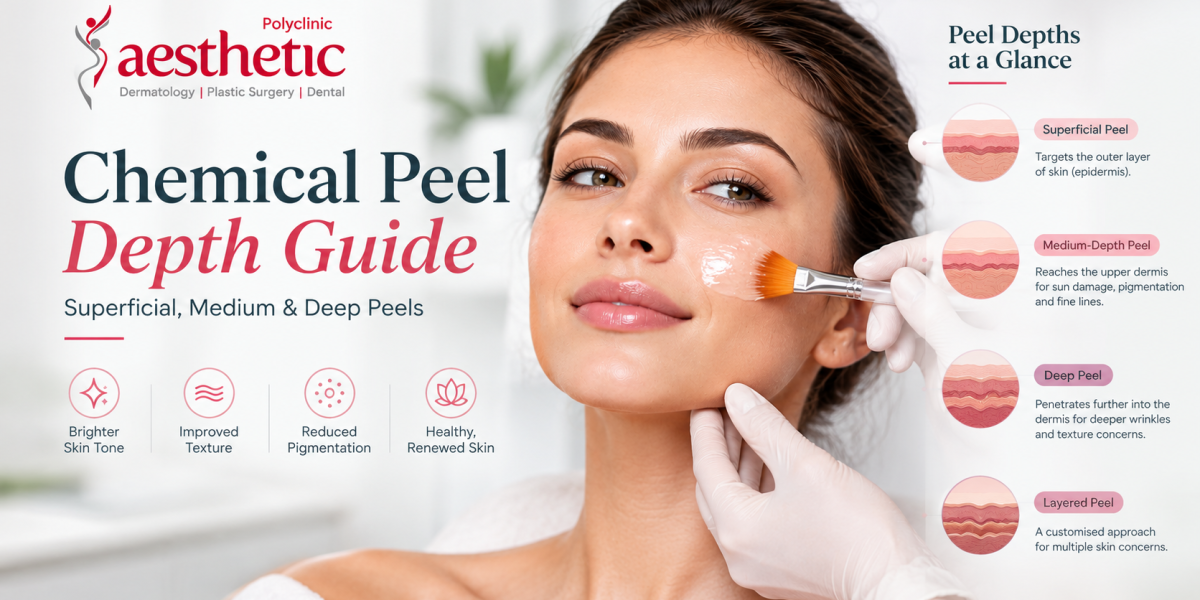
1. Superficial Peels
Superficial peels work only on the epidermis, the skin’s outermost layer, and are typically formulated with mild acids such as low-strength glycolic or salicylic acid. They are suited to dullness, mild congestion, and light unevenness in tone. There is little to no visible peeling afterward, which makes this depth popular with people who want a refresh without taking time off work. The trade-off is that results are subtle and usually need to be repeated in a series to build up.
2. Medium-Depth Peels
Medium peels reach into the upper dermis and are the depth most commonly used for sun damage, moderate pigmentation, and fine lines. Trichloroacetic acid at a moderate concentration is a frequent choice at this level. Visible peeling for several days is normal, and sun protection becomes non-negotiable during recovery since the fresh skin underneath is far more reactive to UV exposure, a real concern given how intense sun exposure is across the UAE for most of the year.
3. Deep Peels
Deep peels penetrate further into the dermis and are reserved for more significant concerns such as deeper wrinkles or pronounced textural damage. This depth requires the most downtime, closer medical supervision, and is used far less frequently than the two categories above. Most reputable clinics reserve this option for cases where superficial or medium peels have already been tried without the desired result.
4. Layered or Combination Peels
Some clinics use a layered approach, applying a mild acid first and building intensity in controlled stages during the same session. This allows the practitioner to stop once the skin shows the right response rather than committing to a fixed depth from the outset. It is a more customised way to treat concerns that sit between two categories, such as moderate pigmentation with a bit of textural roughness mixed in.
Building the Right Peel Plan
Depth selection is rarely a one-time decision. A typical plan starts conservative, especially for anyone new to peels or with a history of sensitive skin, and depth is adjusted over subsequent sessions based on how the skin responds. This gradual approach also protects against the biggest risk of misjudged depth: post-inflammatory pigmentation, which tends to show up more easily in medium-to-deeper skin tones common across the region. Our page on chemical peel treatment and epidermal renewal goes further into how the skin rebuilds itself after each session and why spacing between treatments matters as much as the depth chosen.
Understanding the full range of chemical peel treatment benefits, smoother texture, more even tone, reduced congestion, and a visible glow once new skin surfaces, only really shows up when the depth matches the actual concern. A peel chosen off a menu without any real assessment rarely delivers the same result as one selected after a proper skin evaluation.
If you have tried a peel before and felt it did little for your skin, the depth may simply have been mismatched to your concern rather than the treatment itself being ineffective. Aesthetic Polyclinic offers chemical peel treatments across its Dubai, Abu Dhabi, and Al Ain clinics, with practitioners who assess skin type, tone, and concern before recommending a superficial, medium, or layered approach. A consultation is the most reliable way to find the depth that will actually move your skin forward.
Frequently Asked Questions
How do I know which peel depth is right for me?
It depends on your specific concern and skin sensitivity. Dullness and light unevenness usually call for a superficial peel, while sun damage and moderate pigmentation often need a medium-depth approach. A practitioner will assess your skin before recommending a level.
Is visible peeling normal after a chemical peel treatment?
Yes, to varying degrees. Superficial peels may cause little to no visible flaking, while medium peels typically involve peeling for several days. This is a normal part of the skin renewal process.
Can chemical peels be combined with other treatments?
Often, yes. Peels are frequently paired with treatments like microneedling once pigmentation has improved, though your practitioner will usually recommend spacing these out rather than combining them in the same session.
How many sessions are usually needed to see results?
Superficial peels are typically done in a series of four to six sessions spaced a few weeks apart. Medium and deeper peels may need fewer sessions, but with longer recovery time between each.
Is a deeper peel always more effective?
Not necessarily. A deeper peel is only appropriate when the concern actually requires it. Going deeper than needed increases downtime and risk without improving results for milder concerns.