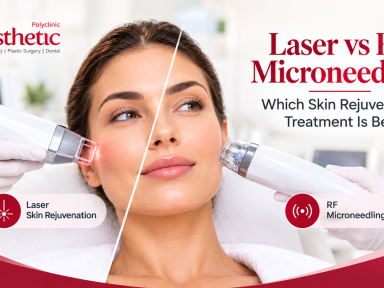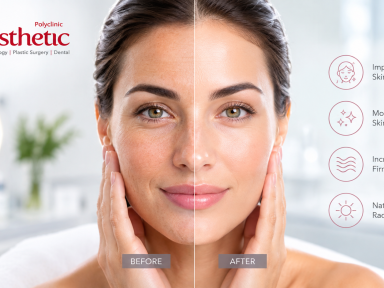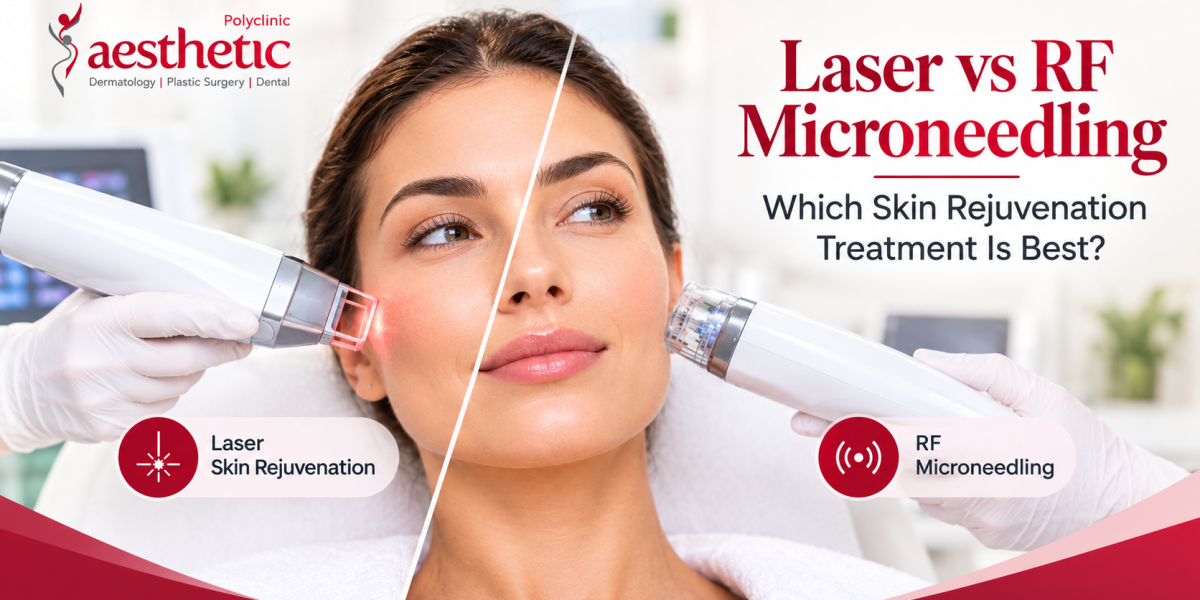
Uneven texture, enlarged pores, fine lines, pigmentation, and early laxity can diminish the skin’s polished appearance. Choosing between Laser vs RF Microneedling isn’t always clear. Both treatments stimulate skin renewal, yet their energy reaches the tissue differently. The American Academy of Dermatology notes that microneedling may improve acne scars, dark spots, large pores, uneven texture, tone, wrinkles, and fine lines.
At Aesthetic Polyclinic, we begin with the skin rather than the device. A personalized assessment helps establish which approach is appropriate for the concern, skin characteristics, and desired degree of refinement.
Laser vs RF Microneedling: Understanding the Core Difference
The fundamental distinction comes down to energy delivery. Laser treatment uses concentrated light. Its wavelength determines how the energy interacts with the skin. Depending on the system, it can address pigmentation, sun-related changes, fine lines, surface texture, or collagen remodeling.
Microneedling takes another route. Fine needles create controlled channels in the skin. When radiofrequency is introduced, thermal energy travels through the needles to selected depths.
This difference becomes particularly relevant when the concern involves a specific layer of the skin. Surface irregularity and pigmentation can require one approach. Early laxity and bigger textural changes may call for another. Neither technology is inherently superior. The more appropriate choice depends on the skin being treated and the result being sought.
Want to explore your options? Read our guide to the best skin rejuvenation treatment for different skin concerns.
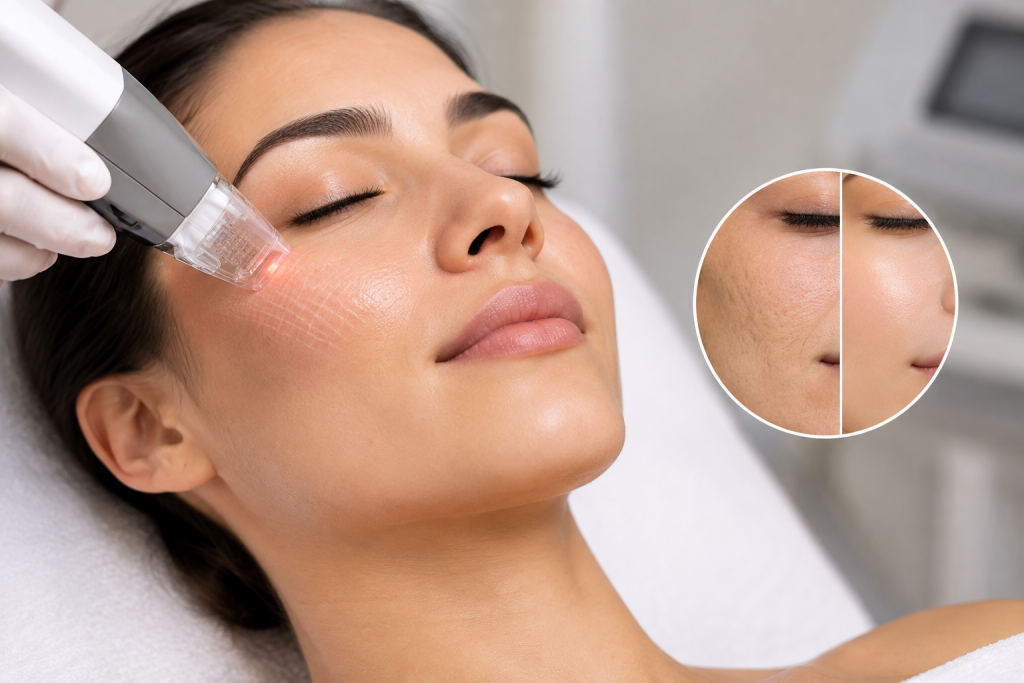
How Laser Skin Rejuvenation Works
Laser technology has advanced significantly. Modern systems can be selected according to the treatment area, skin condition, wavelength, and intended outcome.
Fractional treatment is one example. Rather than treating the entire surface, the laser creates precise columns within selected areas. Surrounding tissue remains untreated. TheASDS explains that fractional lasers create controlled treatment zones while preserving areas of untreated skin. This selective approach makes fractional treatment useful when resurfacing needs to be precise.
Fractional laser treatment may be considered for:
- Fine lines and superficial wrinkles
- Uneven pigmentation
- Sun-related skin changes
- Acne scarring
- Irregular texture
- Dull-looking skin
The laser category also matters. Ablative systems remove part of the outer skin. Non-ablative systems heat deeper tissue without removing the surface.
The ASDS notes that non-ablative laser rejuvenation can improve wrinkles, brown spots, minor scars, and sun-damaged skin. Recovery varies accordingly. A less intensive procedure may involve limited disruption. Stronger resurfacing requires a more considered recovery period.
What Makes RF Microneedling Different?
RF Microneedling combines mechanical stimulation with radiofrequency energy. Fine needles enter the skin at a selected depth. Radiofrequency energy generates controlled heat within the targeted tissue. This dual action may help when texture and firmness require attention together.
It may be considered for:
- Mild to moderate skin laxity
- Fine lines
- Enlarged pores
- Acne scarring
- Uneven texture
- Reduced firmness
- Selected areas of the face and neck
Radiofrequency microneedling can suit different skin tones, but careful assessment remains essential. Device selection, energy level, needle depth, and skin characteristics influence treatment.
Research comparing RF microneedling with laser procedures continues to develop. Therefore, novelty should not determine treatment selection. The technology should have a clear clinical purpose.
Considering skin rejuvenation? A personalized assessment can help determine whether RF microneedling suits your concerns and goals.
Laser vs RF Microneedling for Texture, Pigmentation and Skin Tightening
The choice between Laser vs RF Microneedling depends largely on the concern being treated, the skin’s characteristics, and the desired treatment depth. Both technologies can support skin renewal, but they work differently.
| Skin Concern | Laser | RF Microneedling |
| Texture | Refines surface irregularities through controlled resurfacing | Stimulates collagen at selected depths |
| Acne scars | May improve selected superficial and textural scars | May help deeper textural changes through collagen stimulation |
| Pigmentation | Can directly target selected pigment concerns | Primarily addresses texture and firmness rather than pigment |
| Sun damage | May improve visible sun-related changes | May support overall skin quality |
| Early laxity | Can encourage collagen remodeling | Delivers controlled heat deeper into the skin |
| Fine lines | Can refine surface lines and photoageing | May improve lines through deeper collagen stimulation |
For acne scarring, the scar type and depth matter. The AAD recognises laser and microneedling among options that may reduce the appearance of acne scars.
Pigmentation requires additional care. Certain laser wavelengths can target pigment, while inappropriate settings may contribute to unwanted color changes. The ASDS notes that non-ablative lasers may address brown spots and sun-damaged skin.
RF microneedling may be particularly relevant when texture and early laxity occur together. However, neither treatment replaces surgical lifting for significant tissue descent. Ultimately, skin tone, scar characteristics, treatment depth, recovery, and the primary concern should guide the decision.
Recovery and Treatment Experience
Recovery deserves as much consideration as the treatment itself. Laser recovery depends heavily on the system and intensity. Some non-ablative procedures involve limited downtime. More intensive resurfacing can bring redness, swelling, peeling, and scabbing.
TheASDS lists redness, warmth, swelling, tightness, peeling, and scabbing among possible effects following fractional laser resurfacing. RF microneedling can also leave the skin temporarily red or swollen. Microneedling may cause burning, sensitivity, swelling, or a sunburn-like sensation.
Before choosing a procedure, consider:
- The main concern: Pigmentation and laxity may require different technologies.
- Skin tone: Pigmentary changes deserve consideration before energy treatment.
- Your schedule: Recovery varies considerably between procedures.
- Previous treatments: Recent procedures can affect treatment timing.
- Desired degree of change: A stronger treatment isn’t automatically the better choice.
- Ongoing care: Skin rejuvenation generally forms part of a longer-term approach.
The most considered plan is one that respects both the skin and the individual’s lifestyle.
What Influences the Treatment Choice?
A consultation can reveal details that photographs cannot fully capture. The assessment may include:
- Skin thickness and elasticity
- Pigmentary characteristics
- Sun damage
- Scar depth and pattern
- Pore visibility
- Fine-line distribution
- Degree of laxity
- Previous aesthetic procedures
- Current skincare
- Skin sensitivity
- History of pigmentation changes
- Preferred recovery period
These details provide the foundation for precision. They can also clarify whether resurfacing, collagen remodeling, tightening, or another approach should come first. The intention is not to alter the character of the face. Instead, treatment should preserve facial balance and support natural restoration.
Can RF Microneedling and Laser Be Combined?
In certain circumstances, more than one technology can make clinical sense. A laser may address superficial texture or pigmentation. RF microneedling can then focus on deeper textural or firmness concerns. However, combination treatment isn’t automatically a superior treatment. The skin may need time between procedures to recover properly.
Research continues to compare radiofrequency microneedling with fractional laser approaches. The appropriate sequence depends on the device, treatment intensity, skin condition, and previous procedures.
Combination therapy should therefore be tailored to the individual rather than used as a standard formula.
Skin Tone and Safety Considerations
Skin tone deserves close attention when considering energy-based procedures.
Laser energy interacts with tissue according to its wavelength and target. As melanin absorbs certain wavelengths, settings require particular care for deeper skin tones.
RF microneedling works through needles rather than relying mainly on surface light absorption. Its suitability still depends on the skin, device, settings, and treatment technique.
There are also important safety considerations. In 2025, theAAD acknowledged an FDA safety communication concerning potential risks linked to certain uses of RF microneedling. Possible temporary effects can include:
- Redness
- Swelling
- Sensitivity
- Temporary pigment changes
- Discomfort
- Peeling
- Scabbing
- Prolonged inflammation
- Rare scarring
The technology itself is only one part of the risk profile. Device selection, settings, technique, skin condition, and aftercare also matter. Medical supervision is therefore important.
For those researching skin rejuvenation in Dubai, this Laser vs RF Microneedlingdistinction is worth understanding. Advanced devices offer greater choice, but assessment guides their appropriate use.
Which One Should You Choose?
Laser vs RF Microneedling isn’t a competition with one permanent winner. Laser technology can provide controlled resurfacing. It may be appropriate for pigmentation, photoageing, fine lines, and selected scars.
RF microneedling works through controlled needle penetration and radiofrequency heat. It may be appropriate for texture, pores, scarring, and early laxity. The distinction ultimately comes down to what the skin needs most. Skin tone, treatment depth, recovery, previous procedures, and desired refinement all influence the decision.
At Aesthetic Polyclinic, we take a personalized approach based on the skin rather than applying one protocol universally. A professional assessment can establish which technology is appropriate for your concerns and expectations. The aim is to rejuvenate with restraint, preserve facial character, and support refined, natural-looking results.
Frequently Asked Questions
1. How is Laser vs RF Microneedling different?
Laser delivers concentrated light energy. RF microneedling delivers radiofrequency heat through fine needles at selected depths.
2. Is RF Microneedling suitable for uneven texture?
It can be considered for uneven texture, pores, fine lines, and selected scars. Suitability depends on the skin and treatment objective.
3. When is fractional laser treatment considered?
It can be considered for fine lines, sun damage, pigmentation, texture, and certain scars. Treatment intensity varies according to need.
4. Can laser skin rejuvenation address pigmentation?
Certain laser systems can target pigmentation. However, settings require careful selection to minimize unwanted color changes.
5. Can either treatment tighten loose skin?
Both can support collagen remodeling and improve mild laxity. Neither replaces surgery for substantial tissue descent.