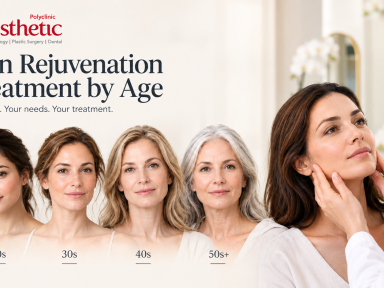
A woman in her mid-thirties books a consultation, convinced she needs collagen stimulation, because every article told her that is what the thirties require. During assessment, the clinician finds that her main issue is uneven pigmentation from years of sun exposure. Her skin is not lacking collagen so much as carrying colour changes that a different approach may address.
Her friend, the same age, has almost no pigment concern but is noticing early softening along the jawline. Same birthday year, entirely different faces.
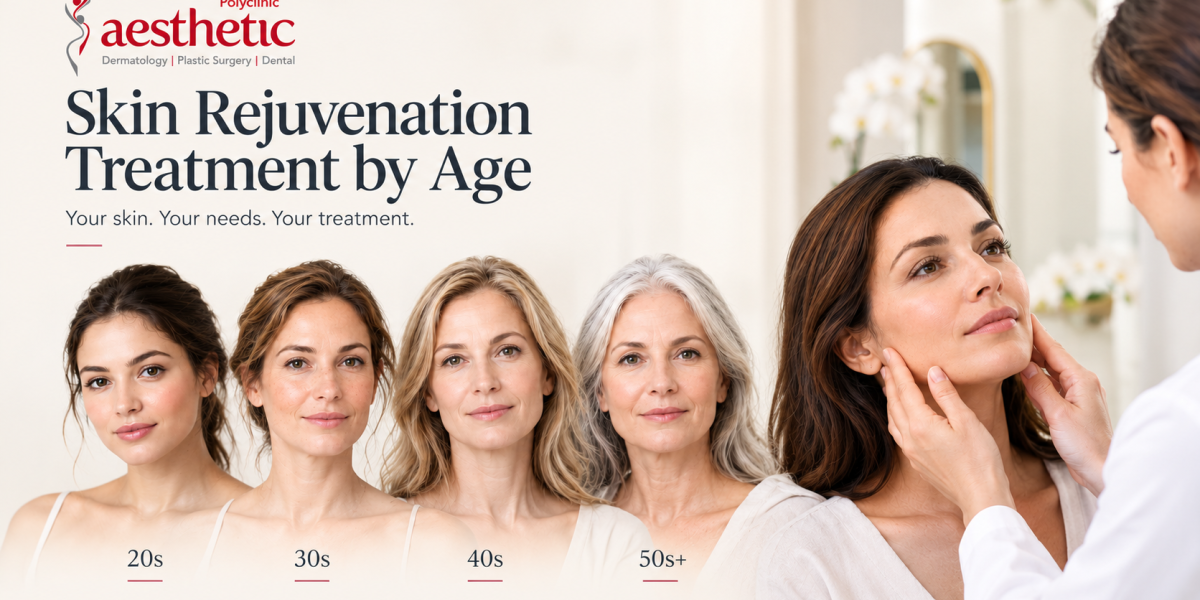
This is why skin rejuvenation treatment by age is a useful starting point but a poor prescription. If age does not determine treatment, something else must, and understanding what that is changes your whole approach.
Why Age Alone Cannot Tell You What You Need
Visible ageing has several causes, and only some sit in the skin. What should you look at instead of a number?
Intrinsic ageing is the gradual change written into your biology: slower cell turnover, less collagen and elastin, and a thinner dermis. Photoageing is the cumulative effect of ultraviolet light, and it shows as pigmentation, rougher texture, fine lines, and lost elasticity. In a region with strong year-round sun, the second can outweigh the first.
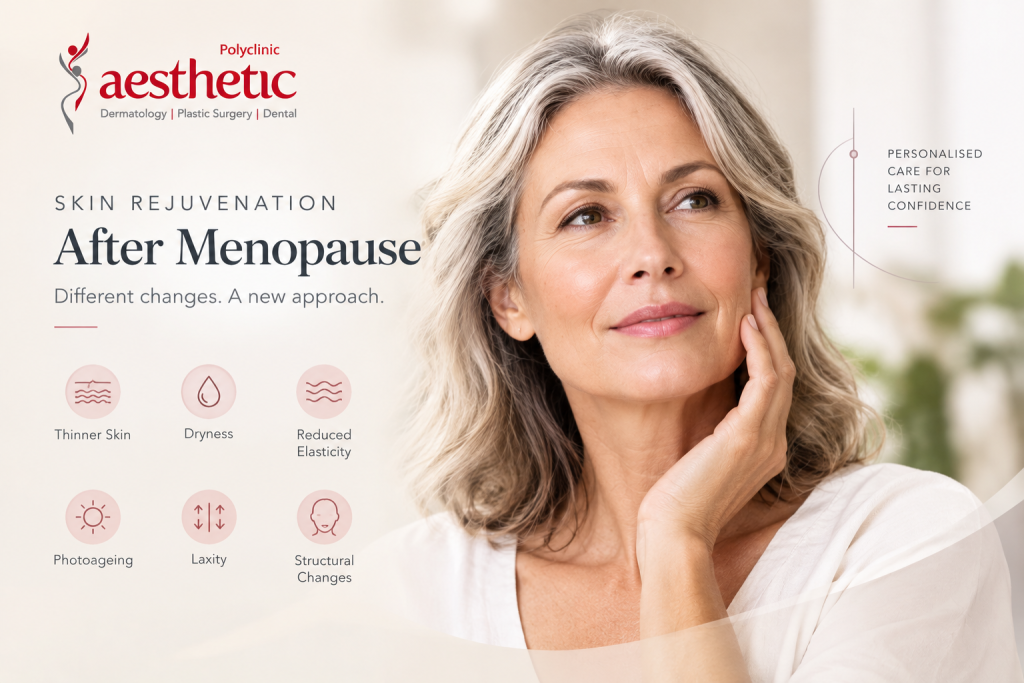
Hormonal stage matters as well. Perimenopause and menopause can be associated with dryness, reduced elasticity, thinner skin, altered collagen, greater sensitivity, and more noticeable fine lines. Beneath the skin, fat compartments shift, ligaments loosen, and bone remodels. A treatment designed to improve skin quality may help certain visible signs without addressing every reason a face looks older.
A guide to skin rejuvenation treatment by age is a rough map of a longer sequence: age suggests likely biological change, that change produces a dominant concern, the concern sits in a particular tissue, and the tissue helps determine the treatment mechanism.
In Your 20s: Treat the Co
The first question at this age is rarely which anti-ageing skin treatments to start. It is whether there is an ageing problem at all. Most people in their 20s benefit more from daily sun protection and a sensible routine than from a procedure.
Treatment may be considered for persistent pigmentation, acne-related texture, early sun damage, or uneven tone that skincare has not resolved. Even then, a gentle, targeted approach is usually more appropriate.
In Your 30s: When Early Skin Changes Become Persistent
The thirties are often when changes that once looked temporary begin to settle. Fine lines stay visible at rest, texture becomes less even, pigmentation lingers, and early laxity appears.
Someone can have pigmentation and early laxity together, and assessment decides which deserves priority. Charts that assign skin rejuvenation treatment by age tend to miss that overlap. Pigment and texture may call for surface-level approaches, while collagen-related change may suit approaches acting within the dermis.
In Your 40s: Distinguishing Skin Quality From Facial Laxity
Many people in their forties ask for a skin treatment when what has changed is the support beneath it. Often the problem has been defined wrongly, not the treatment chosen.
Choosing a Facial Rejuvenation Treatment: Skin or Structure?
Any sound facial rejuvenation treatment plan separates what is happening on the surface from what is happening below it. Signs may include:
- Dullness, roughness, fine lines, and uneven colour usually point to skin quality.
- Patches of brown or grey pigment suggest a pigment-led concern.
- Softening of the jawline, deepening folds or hollowing suggests laxity or volume change beneath the skin.
A skin-focused treatment may refine tone and texture yet do little for a jawline that has lost support. That does not make surgery the answer, only the reason to identify the responsible layer first.
In Your 50s and Beyond: Skin, Hormones and Structural Ageing
After menopause, changes that began earlier often become more established: thinner skin, dryness, reduced elasticity, and longer-standing photoageing, alongside laxity and bigger structural change. Hormonal stage can be relevant when assessing which of these predominates. Skin rejuvenation at this stage may focus on quality and comfort, while laxity may call for a different conversation. Not everyone over 50 needs an invasive procedure; the goals and assessment determine the best approach.
How Skin Type Changes the Treatment Decision
Even with the concern identified, one treatment can behave differently in two patients, largely because of skin phototype and pigment history.
Why Anti-Ageing Skin Treatments Are Not Interchangeable
Darker skin phototypes can have a greater tendency to develop post-inflammatory hyperpigmentation, where inflammation or certain procedures leave lasting marks. Depth, energy settings, intervals, and modality may need careful adjustment, though darker skin can receive lasers and peels with appropriate planning. Among anti-ageing skin treatments, the appropriate option depends on pigment history, current pigmentation, and recovery requirements. That is clinical judgement, not ethnicity.
How to Match the Treatment to the Layer You Want to Change
Once the dominant concern is clear, the question becomes how deeply a treatment needs to work. Deeper is not automatically better, and neither is newer; precision matters more than intensity.
- Surface: tone, pigmentation and fine texture, where gentle approaches may be sufficient.
- Dermal: collagen, elasticity, and fine lines, which may need work at greater depth.
- Deeper structures: laxity, volume and architectural change, which skin-focused treatments are not designed to correct.
Many concerns span two layers, so treatment is often staged.
What Makes a Treatment Right for You?
There is no universally best skin rejuvenation treatment, only the one that suits a specific concern, in a specific person, at a specific time. Phototype changes the risk, depth changes the recovery, and a previous procedure may change what is sensible now. Assessment therefore considers:
- the dominant concern, and whether it is skin-related at all
- skin phototype, pigment history and ageing pattern
- treatment depth, previous procedures and safety
- downtime, sessions, and timing around travel, work and events
- long-term goals and maintenance
The best skin rejuvenation treatment for one patient can be unsuitable for another. Anyone with demanding commitments may do better with a modest treatment that fits their schedule than with an ambitious one that does not.
Common Questions Before Treatment
Does age decide which treatment I need?
Age is a sensible starting point, but it does not settle the question. Sun history, hormonal stage, and skin phototype can make two 45-year-olds need different approaches.
What suits mature skin?
There is no single answer. Thinning, dryness, and sensitivity may call for gentler skin-quality approaches, while laxity may need a different strategy.
How far ahead of an event should I plan?
Allow a generous margin, as some treatments cause redness, peeling, or swelling, and agree on timing around travel and events at assessment. Anyone arranging skin rejuvenation in Dubai should also plan sun protection afterwards.
Reading about skin rejuvenation treatment by age is a sensible place to begin, but only an examination of your skin and the structures beneath it shows what is changing. A consultation at AestheticsCC starts with that assessment, so treatment follows the concern, not the age.