A thread lift is one of the few cosmetic treatments that can meaningfully reposition the face without surgery, and the technique has evolved well beyond simply “pulling skin tighter.” The modern approach relies on vector based facial repositioning, where absorbable threads are placed along specific directional lines that match how the face naturally loses support with age. Done well, the result is a subtle, refreshed look, not a stretched one.
For anyone considering a thread face lift in Dubai, understanding how vectors work makes the difference between an underwhelming result and a treatment that genuinely holds for months. Here is what the technique actually involves.
What Vector Based Repositioning Actually Means
In facial anatomy, a “vector” is a direction of lift. When skin, fat pads, and supporting ligaments descend with age, they do not all fall the same way. The mid face tends to slide downward and slightly forward. The jawline loses definition as tissue drifts toward the lower face. The neck and jowl area sag along their own path.
Vector based facial repositioning maps these individual directions before a single thread is placed. Rather than inserting threads in a generic pattern, the practitioner identifies where each part of the face needs to be lifted and the exact angle that will restore it. This mapping is the foundation of an effective face lifting treatment and the reason two patients with similar concerns can need very different thread placements.
How the Thread Lift Procedure Is Performed
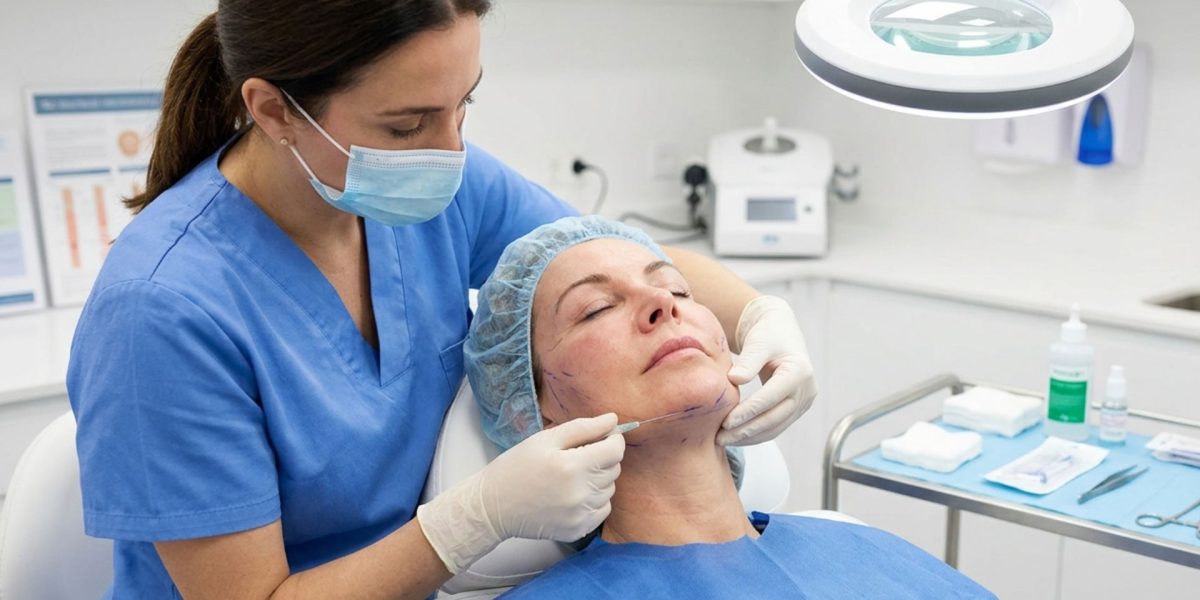
A thread lift is an in-clinic procedure performed under local anaesthetic. After marking the lift vectors on the skin, the practitioner inserts fine, dissolvable PDO, PLLA, or PCL threads through small entry points using a thin cannula. The threads have tiny bidirectional cones or barbs that grip the soft tissue and hold it in the repositioned location.
Once the thread is advanced along the chosen vector, it is gently pulled to reposition the tissue, then anchored. The entry points are so small that sutures are rarely needed. Most patients walk out within 45 to 60 minutes. There is mild swelling and occasional bruising, but the majority of people return to normal activity within 24 to 48 hours.
Over the following weeks, the threads trigger a secondary benefit: collagen stimulation around each thread. This is what gives a well executed facelift Dubai patients notice a gradual tightening that continues after the immediate lift settles.
Common Vectors Used in Facial Repositioning
Most thread lift plans in the UAE work with a combination of the following vector categories. The exact mix depends on the patient’s anatomy and concerns.
Mid Face Vector
Threads are placed from the temple area diagonally toward the cheek apex. This is the most common vector, used to restore volume in the upper cheek and reduce the appearance of nasolabial folds.
Jawline Vector
Threads run from behind the ear down along the jaw, lifting soft tissue back toward the angle of the mandible. This vector is often combined with jaw fillers when structural definition is also needed, since threads reposition tissue but do not add volume.
Lower Face and Jowl Vector
Threads are anchored higher in the lateral face and pulled upward to lift descending jowl tissue. This is one of the most visibly dramatic vectors in any non surgical face lift plan.
Neck Vector
For patients with mild to moderate neck laxity, finer threads are placed along a diagonal vector to sharpen the cervicomental angle.
Who Is a Good Candidate for This Technique
Vector based thread lifts work best for patients with mild to moderate skin laxity who want improvement without surgery or extended downtime. The typical age range is late 30s to mid 50s, though younger patients sometimes use threads preventively, and older patients use them as a maintenance treatment between other procedures.
Good candidates usually share the following:
- Early to moderate jowl or mid face descent
- Defined bone structure to support the lift vectors
- Realistic expectations (a thread lift is a refresh, not a surgical result)
- Good general skin quality, or a willingness to combine treatments
Patients with very heavy, loose tissue or significant volume loss are typically better suited to a combination plan or to surgical options after consultation.
How Thread Lifts Combine With Other Treatments
Thread lifts rarely work in isolation. A well designed plan often layers the thread lift with supporting treatments to address volume, texture, and long term skin quality.
For patients who want contour support alongside their lift, jaw fillers add definition along the mandible that threads alone cannot create. Many patients in Dubai pair the two within the same visit. Those looking for a full non surgical face lift plan may also add skin tightening, Botox for the upper face, or a hydrating treatment in the weeks leading up to or following the procedure.
This layered approach is why consultation matters. A good practitioner evaluates the whole face, not just the area the patient points to in the mirror.
A Smarter Approach to Non Surgical Lifting in Dubai
Vector based facial repositioning has turned the thread lift from a quick fix into a genuinely strategic treatment. When the directions are right, a thread face lift can soften years of descent without changing what makes a face recognisable. When they are wrong, no amount of thread will produce a natural result.
At Aesthetic Polyclinic, our team plans every thread lift around the individual face in front of us: the anatomy, the vectors that need support, and the treatments that may work alongside it. For patients exploring face lifting treatment options in the UAE, booking a consultation is the right place to start before deciding on any procedure.
Frequently Asked Questions
How long does a thread lift last?
Most thread lifts last 12 to 18 months, though the collagen response from the threads often keeps subtle improvements visible for longer.
Is the thread lift procedure painful?
No. It is performed under local anaesthetic, so patients usually feel pressure or tugging rather than sharp pain during placement.
How soon will I see results?
The immediate lift is visible the same day, and the final result settles over 4 to 6 weeks as swelling fades and collagen builds.
Can a thread lift replace a surgical facelift?
Not for advanced laxity. A thread lift is best for mild to moderate sagging and works as a refresh rather than a surgical level transformation.
Can threads be combined with fillers or Botox?
Yes, combinations are common. Jaw fillers, Botox, and skin tightening are often layered with threads to create a balanced, natural result.